
In this Episode of Reviews from the Blind, I take a look at the Canon EOS R and if it can be used as a wildlife camera.
Showing posts with label eos. Show all posts
Showing posts with label eos. Show all posts
It is no secret that the world of photography is moving away from the DSLR and toward Mirrorless. Canon and Nikon could no longer sit back and watch companies like Sony and Fujifilm dominate the mirrorless market. Of note, Canon has had several mirrorless cameras over the years, including the EOS M, but, although a fine camera, it lacked features that series photographers needed.
Canon's latest response to the growing mirrorless market is the Canon EOS R. As promised, I got my hands on an EOS R, and ran it through my normal wildlife photography testing. Although this camera is not marketed toward the wildlife or sports photographer, I still wanted to see just how far I could take this body, and what the results would be.
Specifications
Build Quality/Ergonomics
Picking up the EOS R, I found it to feel smaller than my Canon EOS 7D Mark II, and I also found it slightly less comfortable, however, it does have a nice grip when comparing it to its other mirrorless competitors in this price range. The overall build quality seemed comparable to my 7D Mark II.
The EOS R lost ground with me on layout of the buttons. I found them difficult to find and in some cases operate when compared to the 7D Mark II. I particularly struggled to find the AF-ON button when using back button focus. I do feel confident, that with daily use, I could get much faster in the basic operation. If you are someone who has both a DSLR and want to guy the EOS R, you might find it difficult to switch back and forth. Perhaps the biggest loss to me was the thumb wheel which is normally located on the back of the Canon bodies. On this camera the "wheel" is really just a disc with arrows on it. It is very similar to how the Rebels operate. Canon really "cheaped" out here and I can't help but ask "Why?"
The EOS R redeems much of what it lost with the odd positioning of its buttons with the use of a fully articulating touch screen. I found this to be a great "go-to" when I was having trouble with the manual buttons. Also, the articulating screen will make this attractive for videographers, vloggers and landscape photographers.
The menu system is exactly what you would expect from Canon, and I had no difficulty moving from tab to tab and selecting the correct options. Of course, being able to create your own custom menu tabs is a big help as it is with other Canon cameras.
While looking through the viewfinder, I could definitely tell I was looking at a screen. I am not saying it was terrible, but I could tell it wasn't real. The reason I mention this, is I have heard others say that the screens are so good now, you can't tell very well that you are not looking through a traditional viewfinder.
Also, related to the viewfinder, I noticed that there was some lag between shots and sometimes it would freeze for a moment before getting back to the correct live view of the scene. This caused some confusion as to what the subject was doing, and did I actually miss something? Perhaps this feature can be turned off?
Finally, I had a total failure of the camera right when I needed it most. It actually froze up, and I had to remove the battery and essentially reboot the camera. I chalked this up to it being a new design. I remember when my old 7D classic used to freeze up like this, and I had to remove the battery on it also.
Auto-focus
First, let me say that overall I was very pleased with the auto-focus system. I am not going to tell you that it was 1 Series fast, but it did a fine job, and would handle most of your normal photography needs.
As you may know, I am a wildlife photographer, who specializes in wild bird photography. So that was where I spent my testing time. The auto-focus did not let me down when paired with my Sigma 150-600 and the Canon EF to RF adapter. It quickly found focus but from time to time, it would focus to infinity and just stop. After fiddling with with the lens and placing it on different targets, it would slide in to where I wanted it to go. The latter is very important. This lens does not slam into focus like a 1 Series. It slides into focus and valuable time is lost. Although a useful feature for video, still photographers will find this a disadvantage.
I used the EOS R in Servo mode, which makes the lens continually focus when holding down the shutter button half way or using the AF-ON button. Note, when you switch to Servo, the 8 fps drops to about 5 fps. This made me laugh a bit, since AI Servo is where you need the 8 fps. I am sure that Canon knew that, and simply hit a hard wall on the engineering side.
I did not have time to go somewhere to photograph birds in flight this time, but my gut feeling is that it would not be nearly as good at action as the Canon 7D Mark II or Canon 1DX Mark II. To be fair to Canon, that is really not who this camera is designed for.
Throughout my two days of shooting, I noticed a very strange thing happen while using servo. I held the AF-ON button down, it focused and then as I fired off a burst, it would go out of focus almost every time. During this time, I never moved my auto-focus point off the bird's head. My guess is that this is a bug in the firmware. Finally, the lag I experienced when firing bursts of 5 fps was pretty bad. It was almost like it was trying to preview while firing 5 fps.
My guess is there is a way to turn this off, but I did not find the setting for it. If there is a setting, this should be enabled by default when shooting in servo mode.
EF Mount Adapter
You can't talk about the EOS-R without talking about the amazing EF to RF mount adapter. This adapter will convert your existing EF mount lens to the RF mount. Since all I had were EF lenses, I used it extensively.
I found it to work quite well, but perhaps some of my early autofocus issues could be attributed to this adapter. Having said that, I was really amazed at how well the conversion worked. My particular adapter also had a ring which can be programmed to control whatever you want it to. It would make a great aperture ring, for example.
I have used the MC-11 with Sony cameras to adapt my Sigma 150-600 and they did not work at ALL! Good job Canon! You made it work to almost perfection!
Image Quality
In general, I found the image quality to be excellent, and not at all unexpected. The auto white balance seemed to achieve a very nature look, and I did not have to warm the scene up in post (in most cases). Canon seems to make auto white balance better on ever new camera model.
I did shoot almost exclusively between 800 and 1600 ISO, just to get a feel for an ISO a little on the higher side of things. The results were good, but not great. I think this is due largely to the 30 megapixel sensor. It was better than my APS-C, but not as good as I would like to see. The shadows seemed particularly noisy, even in decent light. Cleaning up the noise in post was not difficult at ISO 1600.
Perhaps the greatest advantage of the 30 megapixel sensor in wildlife photography was in the cropping advantage. I could crop an image in half and still have a solid 15 megapixel image. In wildlife photography, this is a powerful feature.
Conclusion and Wrap Up
First, I applaud Canon for taking their first step in making a serious mirrorless camera. This camera is not a camera to laugh at, and in many cases will be all the photographer would need. I particularly think this would make an amazing landscape and macro camera. The 30 megapixels delivers great detail, and having a fully articulating LCD display allows for low angle shots and vlogging.
Let's talk about the elephant in the room. The price of $2,299 dollars is a bit on the high side. I would like to see this camera come down to about $1,800. Although a really nice camera, it simply does not have the feature set to support this price point. Compared to my Canon 7D Mark II, it is a loser in my opinion in most respects. Yes, I am being tough here and of course it is just my opinion. Remember though, I am a wildlife photographer and not a landscape photographer. That is the perspective of this review.
As far as wildlife, I would not recommend this camera as a primary wildlife camera. Canon hasn't positioned this camera on the market as a fast action camera, so that should not come as a surprise to you. Having said that, It would fill in some of the cracks in my kit as a good static bird and wildlife camera. Having a viewfinder that simulates my exact exposure cannot be overlooked as an awesome feature. I could also see this camera as a good camera for use with a trigger trap. Since it can support higher ISOs which can help increase shutter-speed, it could be very useful in this role.
So, in general, I recommend this camera, IF you are the right audience for this model. I am looking forward to the more feature rich/professional version of this camera. Good job Canon and keep them coming! You are on the right track for sure.
Canon's latest response to the growing mirrorless market is the Canon EOS R. As promised, I got my hands on an EOS R, and ran it through my normal wildlife photography testing. Although this camera is not marketed toward the wildlife or sports photographer, I still wanted to see just how far I could take this body, and what the results would be.
 |
| Canon's EOS R Mirrorless Camera (photo courtesy of Canon) |
- Lens Mount - Canon RF (EF with adapter)
- Weight - 1.45 lbs / 660 g
- Sensor - CMOS 30.3 Megapixel / Full Frame
- File Formats - JPEG, RAW, MP4
- ISO - 100 to 40,000 (Expansion possible to 102,400)
- Shutter - Electronic and mechanical (30 seconds to 1/8000)
- Bit Depth - 14 Bit
- Memory Card Format - SD, SDHC, SDXC
- Image Stabilization - NONE
- Focus Modes - Continuous-Servo AF, Manual, Single Servo AF
- Frames Per Second - up to 8 fps. Only 5 fps in AI Servo!
- Viewfinder - LCD, 3,690,000 DPI
- Viewfinder Coverage - 100%
- GPS - Yes
- Wi-Fi - Yes
- Bluetooth - Yes
- Price - $2,299 US
Build Quality/Ergonomics
Picking up the EOS R, I found it to feel smaller than my Canon EOS 7D Mark II, and I also found it slightly less comfortable, however, it does have a nice grip when comparing it to its other mirrorless competitors in this price range. The overall build quality seemed comparable to my 7D Mark II.
The EOS R lost ground with me on layout of the buttons. I found them difficult to find and in some cases operate when compared to the 7D Mark II. I particularly struggled to find the AF-ON button when using back button focus. I do feel confident, that with daily use, I could get much faster in the basic operation. If you are someone who has both a DSLR and want to guy the EOS R, you might find it difficult to switch back and forth. Perhaps the biggest loss to me was the thumb wheel which is normally located on the back of the Canon bodies. On this camera the "wheel" is really just a disc with arrows on it. It is very similar to how the Rebels operate. Canon really "cheaped" out here and I can't help but ask "Why?"
 |
| Photo showing the amazing fully articulating touch screen, but also the somewhat horrible disc shaped navigation control often found on cheaper Canon cameras. |
The EOS R redeems much of what it lost with the odd positioning of its buttons with the use of a fully articulating touch screen. I found this to be a great "go-to" when I was having trouble with the manual buttons. Also, the articulating screen will make this attractive for videographers, vloggers and landscape photographers.
The menu system is exactly what you would expect from Canon, and I had no difficulty moving from tab to tab and selecting the correct options. Of course, being able to create your own custom menu tabs is a big help as it is with other Canon cameras.
While looking through the viewfinder, I could definitely tell I was looking at a screen. I am not saying it was terrible, but I could tell it wasn't real. The reason I mention this, is I have heard others say that the screens are so good now, you can't tell very well that you are not looking through a traditional viewfinder.
Also, related to the viewfinder, I noticed that there was some lag between shots and sometimes it would freeze for a moment before getting back to the correct live view of the scene. This caused some confusion as to what the subject was doing, and did I actually miss something? Perhaps this feature can be turned off?
Finally, I had a total failure of the camera right when I needed it most. It actually froze up, and I had to remove the battery and essentially reboot the camera. I chalked this up to it being a new design. I remember when my old 7D classic used to freeze up like this, and I had to remove the battery on it also.
Auto-focus
First, let me say that overall I was very pleased with the auto-focus system. I am not going to tell you that it was 1 Series fast, but it did a fine job, and would handle most of your normal photography needs.
As you may know, I am a wildlife photographer, who specializes in wild bird photography. So that was where I spent my testing time. The auto-focus did not let me down when paired with my Sigma 150-600 and the Canon EF to RF adapter. It quickly found focus but from time to time, it would focus to infinity and just stop. After fiddling with with the lens and placing it on different targets, it would slide in to where I wanted it to go. The latter is very important. This lens does not slam into focus like a 1 Series. It slides into focus and valuable time is lost. Although a useful feature for video, still photographers will find this a disadvantage.
I used the EOS R in Servo mode, which makes the lens continually focus when holding down the shutter button half way or using the AF-ON button. Note, when you switch to Servo, the 8 fps drops to about 5 fps. This made me laugh a bit, since AI Servo is where you need the 8 fps. I am sure that Canon knew that, and simply hit a hard wall on the engineering side.
 |
| Dark-eyed Junco - Canon EOS R, ISO 1000, 1/800, Sigma 150-600 C, f6.3 |
I did not have time to go somewhere to photograph birds in flight this time, but my gut feeling is that it would not be nearly as good at action as the Canon 7D Mark II or Canon 1DX Mark II. To be fair to Canon, that is really not who this camera is designed for.
Throughout my two days of shooting, I noticed a very strange thing happen while using servo. I held the AF-ON button down, it focused and then as I fired off a burst, it would go out of focus almost every time. During this time, I never moved my auto-focus point off the bird's head. My guess is that this is a bug in the firmware. Finally, the lag I experienced when firing bursts of 5 fps was pretty bad. It was almost like it was trying to preview while firing 5 fps.
My guess is there is a way to turn this off, but I did not find the setting for it. If there is a setting, this should be enabled by default when shooting in servo mode.
EF Mount Adapter
You can't talk about the EOS-R without talking about the amazing EF to RF mount adapter. This adapter will convert your existing EF mount lens to the RF mount. Since all I had were EF lenses, I used it extensively.
I found it to work quite well, but perhaps some of my early autofocus issues could be attributed to this adapter. Having said that, I was really amazed at how well the conversion worked. My particular adapter also had a ring which can be programmed to control whatever you want it to. It would make a great aperture ring, for example.
 |
| Canon EF to RF Adapter - $99 to $199 depending on the version of the adapter. |
I have used the MC-11 with Sony cameras to adapt my Sigma 150-600 and they did not work at ALL! Good job Canon! You made it work to almost perfection!
Image Quality
In general, I found the image quality to be excellent, and not at all unexpected. The auto white balance seemed to achieve a very nature look, and I did not have to warm the scene up in post (in most cases). Canon seems to make auto white balance better on ever new camera model.
 |
| Northern Cardinal - Canon EOS R - ISO 1250, 1/1000, Sigma 150-600 f6.3, 468 mm (cropped in post) |
I did shoot almost exclusively between 800 and 1600 ISO, just to get a feel for an ISO a little on the higher side of things. The results were good, but not great. I think this is due largely to the 30 megapixel sensor. It was better than my APS-C, but not as good as I would like to see. The shadows seemed particularly noisy, even in decent light. Cleaning up the noise in post was not difficult at ISO 1600.
Perhaps the greatest advantage of the 30 megapixel sensor in wildlife photography was in the cropping advantage. I could crop an image in half and still have a solid 15 megapixel image. In wildlife photography, this is a powerful feature.
 |
| Northern Cardinal - Canon EOS R - ISO 1250, 1/1000, Sigma 150-600 C, f6.3, 600mm |
Conclusion and Wrap Up
First, I applaud Canon for taking their first step in making a serious mirrorless camera. This camera is not a camera to laugh at, and in many cases will be all the photographer would need. I particularly think this would make an amazing landscape and macro camera. The 30 megapixels delivers great detail, and having a fully articulating LCD display allows for low angle shots and vlogging.
Let's talk about the elephant in the room. The price of $2,299 dollars is a bit on the high side. I would like to see this camera come down to about $1,800. Although a really nice camera, it simply does not have the feature set to support this price point. Compared to my Canon 7D Mark II, it is a loser in my opinion in most respects. Yes, I am being tough here and of course it is just my opinion. Remember though, I am a wildlife photographer and not a landscape photographer. That is the perspective of this review.
As far as wildlife, I would not recommend this camera as a primary wildlife camera. Canon hasn't positioned this camera on the market as a fast action camera, so that should not come as a surprise to you. Having said that, It would fill in some of the cracks in my kit as a good static bird and wildlife camera. Having a viewfinder that simulates my exact exposure cannot be overlooked as an awesome feature. I could also see this camera as a good camera for use with a trigger trap. Since it can support higher ISOs which can help increase shutter-speed, it could be very useful in this role.
So, in general, I recommend this camera, IF you are the right audience for this model. I am looking forward to the more feature rich/professional version of this camera. Good job Canon and keep them coming! You are on the right track for sure.
I keep hearing many rumors regarding the possible release of the Canon 7D Mark III, but before I speculate as to what I think the new camera might look like on a spec sheet, I want to redirect you to what the Canon CEO explained to us at the beginning of this year.
Will it be Mirrorless?
With all the talk about Canon's new mirrorless offerings, one simply has to wonder which camera will be next. Will the 7D Mark III be the next mirrorless? Personally, I don't think so. Since the 7D Mark III is the flagship APS-C camera and utilizes the same autofocus system as the 1 Series cameras, I think it will become mirrorless within the same time frame as the 1 Series bodies do. They will be the last to go mirrorless.
What will the Specs Look Like?
We can all sit here and make our predictions and let's be honest it is fun to do that. So why should I be any different. In light of the CEO's announcement above, here are my latest predictions.
Possible Additions
Conclusion
Personally, I think this will be the last 7D series to include a mirror. The 7D Mark IV will be mirrorless as well as the 1DX Mark IV. I think this will be a move that is not only expected by the shooters, but one which Canon has to embrace to continue to be a major player in the marketplace.
The 7D Mark III will not have any features that are earth shaking, but I do think that finally we are are going to see a camera that has had significant enough upgrades to be considered a win by most. This will be the last flagship body to receive the 4K upgrade and it is needed by many. Don't look for huge gains in image quality, but expect to see better noise performance and a huge boost to AF speed. If they remove the AA filter, the image quality will increase also and that could be a huge win for Canon.
I do think this upgrade will be worth moving up from the Canon 7D Mark II for those who are looking to take advantage of the newer features. I think the AF system alone will be worth the upgrade for wildlife photographers.
Announcements:
Check out the latest podcast episodes
I need your help to keep producing content! Consider becoming a patron to my work. Funds received from your help, will go toward keeping the infrastructure in place to keep providing free content. As you know, web site hosting, microphones and recording gear are very costly. To find out more about being a patron and how this can benefit you, head out to my Patreon site : https://www.patreon.com/mattcuda
Individual training, and honest and useful portfolio critiques available. Email me at matt.cuda@mattcuda.com
________________________________________________
My Website: http://www.mattcuda.com
Patreon: https://www.patreon.com/mattcuda
Stock Images: https://www.artvisions.com/cuda/
Newsletter
http://www.mattcuda.com/Home/Newsletter
To purchase any of my prints please use the following link:
https://www.artvisions.com/cuda/
You may also contact me directly to purchase prints: matt.cuda@mattcuda.com
“Our primary management goal this year is to raise our antennas high toward cutting-edge technology. It is on this point where we lag behind other companies. We will open up a research and development center in the U.S.’s Silicon Valley, where we will actively adopt new technology.”Furthermore, there were other quotes which talked about Canon halting development on some products in order to reevaluate and determine what the next steps were. I personally believe that the Canon EOS 7D Mark III design and prototyping was halted in order to determine if it was cutting edge enough and what the future might look like for the camera. As far as announcements, I personally feel like we are looking at Q1 of 2019, but who knows, I may be surprised.
 |
| Canon EOS 7D Mark II - the current flagship APS-C camera offered by Canon |
Will it be Mirrorless?
With all the talk about Canon's new mirrorless offerings, one simply has to wonder which camera will be next. Will the 7D Mark III be the next mirrorless? Personally, I don't think so. Since the 7D Mark III is the flagship APS-C camera and utilizes the same autofocus system as the 1 Series cameras, I think it will become mirrorless within the same time frame as the 1 Series bodies do. They will be the last to go mirrorless.
What will the Specs Look Like?
We can all sit here and make our predictions and let's be honest it is fun to do that. So why should I be any different. In light of the CEO's announcement above, here are my latest predictions.
- 28 Megapixel Sensor
- New AF comparable to the 1DX Mark II
- Autofocus sensor count will not increase or will increase very little
- 4K video at 60 fps
- 1080p video at 120p
- Ability to pull stills out of the 4K video
- 14 fps Continuous Shooting
- Dual Digic 8 processors
- Touch Screen LCD with touch focus on video
- Bigger buffer to handle 6 seconds of continuous shooting at 14 fps
- More cross point AF points
- Ability to shoot f8 lenses/TC on the entire center cluster
- ISO 1600 will be the new ISO 800
- No AA filter - I would love to see this, but I am skeptical.
Possible Additions
- Built in wifi
- CFast card slot(s)
- 30+ Megapixel Sensor (unlikely but possible)
Conclusion
Personally, I think this will be the last 7D series to include a mirror. The 7D Mark IV will be mirrorless as well as the 1DX Mark IV. I think this will be a move that is not only expected by the shooters, but one which Canon has to embrace to continue to be a major player in the marketplace.
The 7D Mark III will not have any features that are earth shaking, but I do think that finally we are are going to see a camera that has had significant enough upgrades to be considered a win by most. This will be the last flagship body to receive the 4K upgrade and it is needed by many. Don't look for huge gains in image quality, but expect to see better noise performance and a huge boost to AF speed. If they remove the AA filter, the image quality will increase also and that could be a huge win for Canon.
I do think this upgrade will be worth moving up from the Canon 7D Mark II for those who are looking to take advantage of the newer features. I think the AF system alone will be worth the upgrade for wildlife photographers.
________________________________________________
Check out the latest podcast episodes
I need your help to keep producing content! Consider becoming a patron to my work. Funds received from your help, will go toward keeping the infrastructure in place to keep providing free content. As you know, web site hosting, microphones and recording gear are very costly. To find out more about being a patron and how this can benefit you, head out to my Patreon site : https://www.patreon.com/mattcuda
Individual training, and honest and useful portfolio critiques available. Email me at matt.cuda@mattcuda.com
________________________________________________
My Website: http://www.mattcuda.com
Patreon: https://www.patreon.com/mattcuda
Stock Images: https://www.artvisions.com/cuda/
Newsletter
http://www.mattcuda.com/Home/Newsletter
To purchase any of my prints please use the following link:
https://www.artvisions.com/cuda/
You may also contact me directly to purchase prints: matt.cuda@mattcuda.com
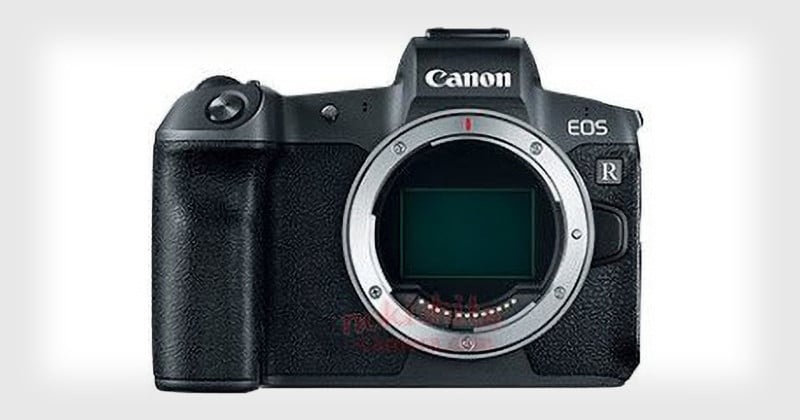 |
| Early Image of the Canon EOS R Mirrorless Camera |
Canon rumors released a bunch of specs for the new Canon EOS R mirrorless camera on September 1, 2018. I have highlighted the specs I really think will be helpful to nature photographers. The specs are as follows...
- Number of effective pixels: 30.3 million pixels (Total number of pixels: 31.7 million pixels)
- Image type: JPEG, RAW (14 bit), C-RAW
- Dual pixel RAW support
- EVF: organic EL, 0.71 times
- AF point: Maximum 5,655 points
- Distance measurement range: EV – 6 to 18 (23 ° C at room temperature · ISO 100 with F1.2 lens)
- ISO sensitivity: 100 to 40000 (extended ISO: 50, 51200, 102400)
- Shutter speed: 1/8000 to 30 seconds, Bulb
- Continuous shooting performance: Up to 8 frames per second (at servo AF: up to 5 frames / sec)
- Video: 4K 30p, FullHD 60p, HD 120p
- Rear liquid crystal display: 3.15 type 2.1 million dots touch panel
- Recording medium: SD / SDHC / SDXC card
- Battery: LP-E6N / LP-E6
- Can charge inside the camera using the USB power adapter PD – E1 (only when using LP – E 6N)
- Size: 135.8 x 98.3 x 84.4 mm
- Weight: 660 g (including battery / memory card) · 580 g (body only)
Based on the fact that most of these are probably not just rumor at this point, I am going to put in my two cents on what I like on paper and what I think might be an issue. I am going to cover this more in depth in a podcast coming out soon.
- 30 megapixels is more than enough for most applications, so I don't see any need to complain here. Honestly, I actually applaud them for not trying to go for 40 or 50. I think that will help keep noise down.
- They are claiming it has 5,655 AF points. So that is pretty much the whole screen and is welcome. I am sure you will be able to choose how many you want to be active as this would be a must for fast action photography.
- I know that Canon is going to get kick back from photographers on only having 4K at 30p, but I still think this is a good offering on their first mirrorless targeting advanced photographers. Hopefully it will not be a crop like it is on the Canon 5D Mark IV.
- Some images suggest that it has a fully articulating screen. This is going to be huge for vloggers and shooting from low angles.
- Only 660 grams compared to 910 grams of the 7D Mark II. All you weight snobs should be happy about that. Personally, the camera is always the lightest part of the equation in wildlife photography, so I don't worry about it.
- Only 8 frames per second, but that is more than enough for wildlife photography. 8fps or above is the sweet spot for action work.
That's really all I have to say for now on this topic. We really need to wait a bit longer to see how everything shakes out. This is indeed exciting news as Canon moves into the new era of photography!
______________________________________________
Announcements:
Check out the latest podcast episodes
I need your help to keep producing content! Consider becoming a patron to my work. Funds received from your help, will go toward keeping the infrastructure in place to keep providing free content. As you know, web site hosting, microphones and recording gear are very costly. To find out more about being a patron and how this can benefit you, head out to my Patreon site : https://www.patreon.com/mattcuda
Individual training, and honest and useful portfolio critiques available. Email me at matt.cuda@mattcuda.com
________________________________________________
My Website: http://www.mattcuda.com
Patreon: https://www.patreon.com/mattcuda
Stock Images: https://www.artvisions.com/cuda/
Newsletter
http://www.mattcuda.com/Home/Newsletter
To purchase any of my prints please use the following link:
https://www.artvisions.com/cuda/
You may also contact me directly to purchase prints: matt.cuda@mattcuda.com


