Showing posts with label nature. Show all posts
If you haven't already done so, please check out Part I of this series as it will help you understand this blog entry better.

Gear Used for Testing


For the second series of tests, I decided to head to the Great Smoky Mountains of North Carolina and Tennessee.  Here, I was better able to test the Sony against mammals and shoot some water features.  Since, I live close to the Smokies, I can make it to the location on a day trip.

After about a 3.5 hour drive, I was on location at Cataloochee, NC.  This is an area of the Smokies I often go to, to photograph Rocky Mountain Elk.  On this day, however, there were no elk to be found.   Not only were there no elk to be found, but no turkeys either.  Both, are usually common here.  After some head scratching moments, I found myself photographing Cataloochee Creek. That is the great thing about the smokies. There are always opportunities and sometimes you just have to switch to Plan B when you are at a location.

As the testing continued, I noticed I was becoming fairly familiar with the Sony, so finding the right settings was not difficult at all.  I have to say though, I missed having the top LCD that I have gotten so used to using on the Canon DSLR cameras.  It is nice to just glance down on it and make quick changes.  However, you can pop out the back viewfinder on the Sony and kind of accomplish the same task by using the various display options.

I put my Sony A7 III on my tripod, changed to uncompressed RAW and made several images from 20 to 30 seconds of the water.  Some images were made using a polarizing filter and some were not.  For a lens, I chose the Canon EF 24mm f2.8 set at f22. My ISO was set to 100.  Really there was too much diffraction at f22. I would have been better off using f11 and focus stacking.  

I thought that overall, the image quality was amazing.  It is easy to see why Sony cameras are used so heavily by landscape photographers.  I particularly thought the greens were well represented, but I thought the dynamic range could have been a little better.  Below is an example of the shots at Cataloochee Creek.

Cataloochee Creek - Sony A7 III, 30 Seconds, 24mm, f22, ISO 100
My day was certainly not over at this point, so I loaded everything back in the car and headed over a couple mountains to Cherokee, NC to see if there were any elk near there.  I arrived maybe 40 minutes later at this location, but again, found no elk.  Such is the life of a wildlife photographer.

So, at this point, I had a choice.  I could wait here and see if the elk would make an appearance, or I could make a  two hour run over to Cades Cove in Tennessee.  Being in a fairly adventurous mood, I headed for Cades Cove.  At the same time, the clouds began to move in.  This was actually a blessing and would allow me to shoot all day long.

Two hours later, I arrived at Cades Cove and entered the car touring loop.  The first pass was quiet, but on the second pass, I found a few whitetail does to try my hand at.  I was using the expand flexible spot with lock-on mode for all of the doe shots and my ISO was 1600 plus.  Below are two images from that fairly short shoot.

Cades Cove, TN - Whitetail Deer (ISO 1600, 1/800, Sigma 150-600, 347mm)


I spent another couple hours here and also photographed some turkeys.  I didn't think they were really good enough to put in this blog, I left them out.  At this point in the game, it was getting to be later in the afternoon.  Knowing that I was now close to five hours from home, I decided it was best to head back up over the mountains.

As I came back into the Cherokee, NC area, I was met with a good surprise.  The herd of elk were making their way toward the main road to cross.  I quickly made a u-turn and pulled off the side of the road.  I knew I wouldn't have much time, so I quickly got my gear together and headed over to the open fields they were crossing.

Almost as soon as I started shooting I noticed an elk calf running to catch up with the herd.  I switched on the camera and started shooting.  This would be a good test for the camera's tracking.  Later, I determined the burst only got about 1 frame sharp out of the series.  This was a bit of a disappointment for me.  I should also note that I had a good lock on the elk's head, so there was no user error here.  Below is the best image and even it is not super tack sharp.  It is acceptable sharpness.

Cherokee, NC - Elk Calf Catching up with the Herd, Sigma 150-600, f6.3, 600 mm, ISO 500, 1/2000

I continued to monitor the herd, but it was getting harder as they tried to make the crossing across the road.  I managed to get this shot below of one of the bull elk heading for the road.

Cherokee, NC - Bull Elk in Velvet, Sigma 150-600, f6.3, 421 mm, ISO 1250, 1/2000

At this point it was quickly getting late and I really needed to head home.  That is, if I wanted to get home before midnight.  So, I reluctantly gathered my gear and off I went.

On this second outing with the camera, I certainly became much more acquainted with how it works and felt like I was becoming much more proficient.  However, there are still several more tests to come, before I am ready to put my seal of approval on it.  Here are the pros and cons from photographing mammals in the Smokies.

PROS

  • The buffer is really great when using compressed raw.  I never ran out of buffer when shooting these animals.
  • Being able to see the camera lock and follow the animal, even when using the expansion modes was awesome.  I call it the dancing green AF points.
  • Great image quality when photographing at higher ISOs.  By higher, I mean anything between 1600 and 6400.
  • Flip up screen was very useful when photographing low level flowers and fungi.
  • MC-11 loved my Canon 100mm Macro.  It drove the autofocus without issue.
  • Great looking greens in the landscape shots.


CONS

  • Unable to switch to silent mode because of the potential for distortion from running Elk.  That is a big bummer!
  • Autofocus seemed to struggle a bit on the running elk, even though it showed locked on.  Two of the best poses were missed. This is most likely and MC-11/150-600 issue.
  • Single point shooting not as effective as expansion modes with lock-on.  This causes focus to grab the noses and not the eyes.
  • Animal eye detect is not available at the time of this writing for the MC-11. I put a request in for Sigma to introduce it, but who knows.  That would have prevented the issue above.
  • It would be nice to be able to shoot uncompressed RAW with a deep buffer. 


EOS 6D Mark II Front with Open LCD
Photo Courtesy of Canon USA

There is a camera that has been sleeping quietly in the Canon lineup.  It is a camera that has most of the features that many photographers are interested in.  It is a camera that might not be as innovative as the latest mirrorless camera.  It is also a camera that, frankly, you might want.

That sleepy camera is the Canon EOS 6D Mark II.  Boasting an all new autofocus system, 6.5 frames per second, and a full frame 26 megapixel sensor, the 6D II is certainly a good option for many.  But, why does it get negative or no press at all?  Why is it frowned upon?  Is there any substance to what people are saying?  I can only speak from my own experience with this camera.  This review will be my own experiences, and what I think this camera can and can't do.  First, let's look at the full list of specifications.

Specifications
  • All new 26.2 megapixel full frame sensor
  • 45 cross type AF points (all cross type depending on lens)
  • Single DIGIC 7 processor
  • 6.5 frames per second continuous shooting for 21 raw exposures.
  • Max shutter speed 1/4000
  • No 4K video
  • 1080p video up to 60 fps
  • 4K time-lapse movies
  • Autofocus available at f8 with modern Canon glass (not guaranteed with 3rd party)
  • WI-FI is built in
  • GPS is built in
  • NFC is built in
  • ISO 100 to 25,600 (expandable to 102,400)
  • Lights which flicker (eg. fluorescents) can be managed with the anti-flicker mode
  • Flash sync speed of 1/180
  • Touchscreen during video for better focusing
  • Singe SD card slot
  • Duel pixel AF live view video recording
  • Fully articulating viewfinder
  • Canon LP-E6N battery
  • Released June 2017

Build Quality/Fit and Finish
The 6D Mark II is a pleasure to shoot, and the ergonomics are similar to that of it's APS-C cousin, the Canon EOS 80D. Canon, has always favored a larger, easy to handle grip, and when compared to other mirrorless cameras, such as Sony, it really stands at the top of the list. 

Canon has also made a real effort in the last several years to make sure that its newer cameras have a fully articulating view screen, and the 6D II boasts just that. Although a modest size, the 3.0 inch touch screen viewfinder is easy to read and operate. 

Button locations have changed slightly with this model.  The "Q" button is now located down by the base of the thumb cutout on the back of the camera.  At first I found this a bit odd, but quickly got used to it.  I especially like that canon left the AE-Lock button and the auto-focus point selector up in the right corner of the camera as it has been there for many years and is comfortable to me.

I wish I could say I liked all the buttons on the Canon 6D Mark II, but I can honestly say I hate their clunky selector disk.  I have no idea why they do not have a joystick on all their cameras for adjusting auto-focus points and moving around the menus.  Come on Canon, that is a no-brainer. It should no longer be a feature, but should be standard.
Video showing touch interface

The menu system is easy to operate and should be familiar to anyone with a fairly modern Canon camera. I found the touch screen to make moving around the menu system much easier and a huge bonus for me.  That might be worth the price of admission right there, but I am not quite willing to fold on that feature alone.

Now, this next wish is not a huge deal, but why not put a popup flash into this camera? After all, it is not targeted toward the pro market and frankly, I would find it useful. The popup flash, in my world, is good for acting as a master flash in a multi-flash master/slave setup. I don't use it as an actual flash, but it might be nice for some at Christmas or family get togethers to give them a little built in flash help. The bottom line is that everything about the ergonomics of the 6D Mark II just felt like a Canon.  It was comfortable and easy to operate.  I give it a solid green checkmark in this category.

Autofocus
In order to test the 45 point AF system, I took the camera out to my son's last soccer game of the year.  I felt like this would be a good test for a Camera that is targeting the generalist photographer.  To say I was skeptical of what the autofocus could do would be a great understatement.  Due to the sensitive nature of putting images of children online, I elected not to show the pics. You will have to trust me on it. Thanks for understanding. 

For me, to fairly test the camera, I programmed the AE-Lock button to be the back button focus button.  Since this is how I have my personal cameras setup, I thought I would have a better chance at an accurate auto-focus review. My lens selection for this test would be my Sigma 150-600 C.

As my testing began, I realized right away that 45 AF points on a full frame sensor is just too few to cluster in the center of the screen. It really made it difficult to put a sensor on the eye of the soccer player, and I ended up placing the center sensor on the player's chest or stomach and hoping for the best. I would really like to see 65 points spread out across the viewfinder or even spread the 45 points out more. Some have speculated that Canon simply dropped the 80D AF sensor directly into the 6D Mark II. I don't know about that one, but it sure does look that way!


The AF performance was much better than expected.


Now, what really blew my mind is how well this AF system locked on. I had quite a few keepers that day to say the least. I read some "internet experts" who said that its AF system struggled. A this point in the game my question was, "struggles compared to what, a 1DX Mark II?" OK, I'll give you that, but for the target market of this camera, it is more than good at autofocusing. I am not sure I would trust it for a great deal of birds in flight photography, but for general wildlife, I think it would work fine. It might even surprise us with birds.

The greatest autofocus feature of this camera is not the standard autofocus sensor, but the touch screen focus using live view. It is accurate, fast and doesn't jar the camera. Using the dual pixel AF with touch screen was a match made in heaven. Simply touch the face of the person or object you want to focus on, and the lens slides into focus. Of course you can see the benefits of this feature, particularly when shooting video.

Image Quality
I am not going to lie to you, the Canon 6D II has taken a great deal of criticism about its image quality and particularly how it relates to the original 6D.  Testing has shown that the new sensor does not have the highlight/shadow recovery that was capable in its predecessor.  Now, I am sure that Canon had its reasons for this, and I am sure they are pretty darn good reasons!  However, to  the average consumer, it just looks like shoddy work.  Playing devils advocate, understand that this sensor came out before the new announcement from the Canon CEO saying that Canon had been slack for too long and was going to be more innovative in the future.  It still doesn't excuse the lack of dynamic range of the new sensor, but may offer some insight.

Day two of my testing involved taking photographs of hummingbirds. After the shoot, during post processing I will say that I did notice the lack of dynamic range, but it did have more dynamic range than my Canon 7D Mark II (if that is any consolation).  Now, I do think it should have at least similar dynamic range to the 6D, but if all you care about is dynamic range, then you need to take a course on photography and learn to shoot the scene properly.


Canon EOS 6D Mark II, Canon EF 300mm F4 @ f14, 1/180th, ISO 100
Canon 7D Mark II, ISO 100, 1/200, Canon EF 300 F4 @ f14
In the first image above we have a fairly significant crop with the 6D image and it retains a great deal of it's quality.  The bottom pic, for purposes of basic comparison is almost full sensor and is from my 7D.  I personally though the 6D had better image quality.  Click on the images to get a better idea.  They were both pretty dang good though. You be the judge.

Overall, I thought the image quality was certainly a cut above any APS-C sensor, and I think would serve many people very well.  I would be happy to shoot with it.  I thought the sharpness of the sensor was great, the color on par with other Canon sensors and the "cropability" of the final raw file to be excellent.


Video
To be honest, I don't think this camera was targeted toward serious videographers or cinematographers, but what it does do is provide a platform for VLOGs. So much so that Casey Neistat switched to it as his vlogging camera. If you don't know who Casey is then you have been living under a rock.
Video showing fully articulating screen
No, it does not produce 4K video and the 1080 video is somewhat suspect, but with that fully articulating screen and touch focus, it has pulled through as a contender. If we could couple the video quality of the Sony with the usability of the Canon, we would have the best video camera on the planet!

Although I am trained as a videographer, in the end I am really a stills guy. So putting together a large critique of the video system of this camera is not going to happen here. What I did see of it, I liked, with lack of 4K being the only caveat in my mind.


Can I use this for Wildlife?

Although I have already alluded to the fact that it can be used for wildlife, I want to hone in more on that topic and break it down by genre.
  • Animals running? Yes, effectively
  • General Birds in Flight? Yes, but less effective than 1 Series or 7D II. It only supports 6.5 fps so that might keep you from getting all the wing positions and so forth.
  • Animal Portraits? Yes, perfectly
  • Hummingbirds? Yes, perfectly
  • Songbirds in Flight? Not ideal unless using studio flash technique with Photo Trap. 1/4000th of a second top shutter speed might not be enough for ambient shots, but largely depends on the bird's speed.
  • Low Light Animals? Yes, good low light capability
Listen to 6.5 FPS 

Conclusion and Wrap up
So, what lead me to do this review?  Well, to be honest, I am looking for a good full frame camera to fill in the cracks on my Canon EOS 7D Mark II.  One of the biggest cracks in the 7D is the fact that it is a poor landscape camera at best.
For those times when image quality trumps all, it is great to have the flexibility of the full frame IQ.  There is nothing quite like the look of full frame images and they seem to only be getting better.  Honestly, I thought the overall IQ was great.

So, would I buy this camera say over a used Canon 5D Mark III?  That is the question I have to answer now.  In many ways the 6D Mark II is a better camera, but in many ways, the 5D III is.  It really comes down to whether the articulating screen is more important than more autofocus points on the 5D.  That debate will go on inside my noggin until I finally make a decision, but I won't decide today.  


I hope this review will help you make a good decision.

If what you want is a good, general full frame camera with a few extra bells and whistles, but has a lower price tag, then this camera is for you.  I have listed what I think are the pros and cons below.


PROS

  • Full frame sensor
  • Improved 45 point AF system (much better than I thought)
  • 6.5 fps gets us closer to that magic 8fps for birds in flight and fast action.
  • Fully articulating touch LCD screen
  • F8 autofocus possible
  • WIFI, NEF, Bluetooth, GPS
  • Great feel and ergonomics

CONS

  • Less dynamic range than expected
  • Lack of joystick on back of camera
  • AF points all clustered in the middle of the viewfinder
  • No 4K video
  • Viewfinder not 100% coverage (more like 98%)
  • Lack of popup flash to act as a master in a multi-flash setup.

As usual, make it a great day and get out there and enjoy nature!

Video Review of the Canon 6D Mark II...
________________________________________________

Announcements:
Check out the latest podcast episodes
I need your help to keep producing content! Consider becoming a patron to my work. Funds received from your help, will go toward keeping the infrastructure in place to keep providing free content. As you know, web site hosting, microphones and recording gear are very costly. To find out more about being a patron and how this can benefit you, head out to my Patreon site : https://www.patreon.com/mattcuda
Individual training, and honest and useful portfolio critiques available. Email me at matt.cuda@mattcuda.com
________________________________________________
My Website: http://www.mattcuda.com


Patreon: https://www.patreon.com/mattcuda

Newsletter
http://www.mattcuda.com/Home/Newsletter


You may also contact me directly to purchase prints: matt.cuda@mattcuda.com


If you haven't already done so, it is time to setup the hummingbird feeders. I have a great deal of activity at my feeders and have started photographing the ruby-throated hummingbird.

As many of you know, I expand The Hummingbird Project in my backyard every year. This year, I am using different flower arrangements and other unique backgrounds to really make the image pop. If you are unfamiliar with The Hummingbird Project check out these links to get you started and following my journey.

Hummingbird Project:
http://blog.mattcuda.com/2016/06/the-hummingbird-project.html
http://blog.mattcuda.com/2018/02/june-was-month-for-hummingbirds.html

Hummingbird Photography Podcast Episode:
http://www.mattcuda.com/app/podcast/Episode16.mp3

My Goals for the Hummingbird Project this Year

  • Create images showing the birds from different angles
  • Create images of the birds in different settings. This might involve different locations or different backgrounds.
  • Keep from duplicating previous years photography
  • Don't get so hung up photographing the birds that I forget to enjoy their behavior
A male ruby-throated hummingbird gathering nectar from penstemon. 

I encourage all nature photographers to make an effort to photograph these amazing little birds at least one time. There are numerous approaches you can use to capture images of these little guys, so I encourage you to view the above links to find out more. I tend to gravitate more toward the "artsy" side of things with hummers. It gives them the formal, somewhat regal, images they deserve.


I keep hearing many rumors regarding the possible release of the Canon 7D Mark III, but before I speculate as to what I think the new camera might look like on a spec sheet, I want to redirect you to what the Canon CEO explained to us at the beginning of this year.
Our primary management goal this year is to raise our antennas high toward cutting-edge technology. It is on this point where we lag behind other companies. We will open up a research and development center in the U.S.’s Silicon Valley, where we will actively adopt new technology.”
Furthermore, there were other quotes which talked about Canon halting development on some products in order to reevaluate and determine what the next steps were.  I personally believe that the Canon EOS 7D Mark III design and prototyping was halted in order to determine if it was cutting edge enough and what the future might look like for the camera. As far as announcements, I personally feel like we are looking at Q1 of 2019, but who knows, I may be surprised.
Canon EOS 7D Mark II (G) Digital SLR Camera Body {20 M/P}
Canon EOS 7D Mark II - the current flagship APS-C camera offered by Canon

Will it be Mirrorless?

With all the talk about Canon's new mirrorless offerings, one simply has to wonder which camera will be next.  Will the 7D Mark III be the next mirrorless?  Personally, I don't think so.  Since the 7D Mark III is the flagship APS-C camera and utilizes the same autofocus system as the 1 Series cameras, I think it will become mirrorless within the same time frame as the 1 Series bodies do.  They will be the last to go mirrorless.  

What will the Specs Look Like?

We can all sit here and make our predictions and let's be honest it is fun to do that.  So why should I be any different.  In light of the CEO's announcement above, here are my latest predictions.
  • 28 Megapixel Sensor
  • New AF comparable to the 1DX Mark II
  • Autofocus sensor count will not increase or will increase very little
  • 4K video at 60 fps
  • 1080p video at 120p
  • Ability to pull stills out of the 4K video 
  • 14 fps Continuous Shooting
  • Dual Digic 8 processors
  • Touch Screen LCD with touch focus on video
  • Bigger buffer to handle 6 seconds of continuous shooting at 14 fps
  • More cross point AF points
  • Ability to shoot f8 lenses/TC on the entire center cluster
  • ISO 1600 will be the new ISO 800
  • No AA filter - I would love to see this, but I am skeptical. 

Possible Additions

  • Built in wifi
  • CFast card slot(s)
  • 30+ Megapixel Sensor (unlikely but possible)

Conclusion
Personally, I think this will be the last 7D series to include a mirror.  The 7D Mark IV will be mirrorless as well as the 1DX Mark IV.  I think this will be a move that is not only expected by the shooters, but one which Canon has to embrace to continue to be a major player in the marketplace.

The 7D Mark III will not have any features that are earth shaking, but I do think that finally we are are going to see a camera that has had significant enough upgrades to be considered a win by most.  This will be the last flagship body to receive the 4K upgrade and it is needed by many.  Don't look for huge gains in image quality, but expect to see better noise performance and a huge boost to AF speed.  If they remove the AA filter, the image quality will increase also and that could be a huge win for Canon.


I do think this upgrade will be worth moving up from the Canon 7D Mark II for those who are looking to take advantage of the newer features.  I think the AF system alone will be worth the upgrade for wildlife photographers.


________________________________________________

Announcements:
Check out the latest podcast episodes
I need your help to keep producing content! Consider becoming a patron to my work. Funds received from your help, will go toward keeping the infrastructure in place to keep providing free content. As you know, web site hosting, microphones and recording gear are very costly. To find out more about being a patron and how this can benefit you, head out to my Patreon site : https://www.patreon.com/mattcuda
Individual training, and honest and useful portfolio critiques available. Email me at matt.cuda@mattcuda.com
________________________________________________
My Website: http://www.mattcuda.com


Patreon: https://www.patreon.com/mattcuda
Stock Images: https://www.artvisions.com/cuda/

Newsletter
http://www.mattcuda.com/Home/Newsletter

To purchase any of my prints please use the following link:
https://www.artvisions.com/cuda/

You may also contact me directly to purchase prints: matt.cuda@mattcuda.com


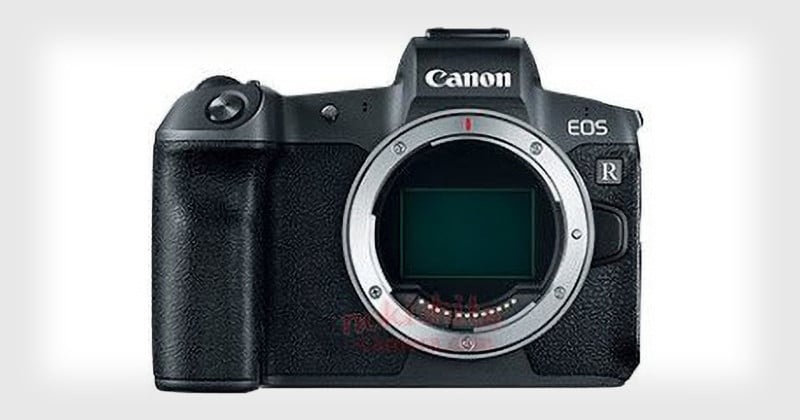
Early Image of the Canon EOS R Mirrorless Camera


Canon rumors released a bunch of specs for the new Canon EOS R mirrorless camera on September 1, 2018.  I have highlighted the specs I really think will be helpful to nature photographers.  The specs are as follows...

  • Number of effective pixels: 30.3 million pixels (Total number of pixels: 31.7 million pixels)
  • Image type: JPEG, RAW (14 bit), C-RAW
  • Dual pixel RAW support
  • EVF: organic EL, 0.71 times
  • AF point: Maximum 5,655 points
  • Distance measurement range: EV – 6 to 18 (23 ° C at room temperature · ISO 100 with F1.2 lens)
  • ISO sensitivity: 100 to 40000 (extended ISO: 50, 51200, 102400)
  • Shutter speed: 1/8000 to 30 seconds, Bulb
  • Continuous shooting performance: Up to 8 frames per second (at servo AF: up to 5 frames / sec)
  • Video: 4K 30p, FullHD 60p, HD 120p
  • Rear liquid crystal display: 3.15 type 2.1 million dots touch panel
  • Recording medium: SD / SDHC / SDXC card
  • Battery: LP-E6N / LP-E6
  • Can charge inside the camera using the USB power adapter PD – E1 (only when using LP – E 6N)
  • Size: 135.8 x 98.3 x 84.4 mm
  • Weight: 660 g (including battery / memory card) · 580 g (body only)

Based on the fact that most of these are probably not just rumor at this point, I am going to put in my two cents on what I like on paper and what I think might be an issue.  I am going to cover this more in depth in a podcast coming out soon.
  1. 30 megapixels is more than enough for most applications, so I don't see any need to complain here.  Honestly, I actually applaud them for not trying to go for 40 or 50.  I think that will help keep noise down.
  2. They are claiming it has 5,655 AF points.  So that is pretty much the whole screen and is welcome.  I am sure you will be able to choose how many you want to be active as this would be a must for fast action photography.
  3. I know that Canon is going to get kick back from photographers on only having 4K at 30p, but I still think this is a good offering on their first mirrorless targeting advanced photographers.  Hopefully it will not be a crop like it is on the Canon 5D Mark IV.
  4. Some images suggest that it has a fully articulating screen.  This is going to be huge for vloggers and shooting from low angles.
  5. Only 660 grams compared to 910 grams of the 7D Mark II.  All you weight snobs should be happy about that.  Personally, the camera is always the lightest part of the equation in wildlife photography, so I don't worry about it.
  6. Only 8 frames per second, but that is more than enough for wildlife photography.  8fps or above is the sweet spot for action work.

That's really all I have to say for now on this topic.  We really need to wait a bit longer to see how everything shakes out.  This is indeed exciting news as Canon moves into the new era of photography!


 ______________________________________________

Announcements:

Check out the latest podcast episodes


I need your help to keep producing content! Consider becoming a patron to my work. Funds received from your help, will go toward keeping the infrastructure in place to keep providing free content. As you know, web site hosting, microphones and recording gear are very costly. To find out more about being a patron and how this can benefit you, head out to my Patreon site : https://www.patreon.com/mattcuda


Individual training, and honest and useful portfolio critiques available. Email me at matt.cuda@mattcuda.com
________________________________________________
My Website: http://www.mattcuda.com


Patreon: https://www.patreon.com/mattcuda
Stock Images: https://www.artvisions.com/cuda/

Newsletter
http://www.mattcuda.com/Home/Newsletter

To purchase any of my prints please use the following link:
https://www.artvisions.com/cuda/

You may also contact me directly to purchase prints: matt.cuda@mattcuda.com


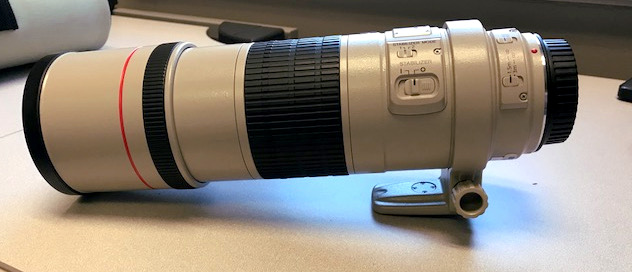
Within the Canon umbrella of luxury(L) lenses, there is a lens which sleeps quietly among a handful of fairly affordable telephotos.  It is a lens which can be used for modest action photography and even as a close focusing butterfly lens.  It has been used by greats such as Arthur Morris and regular Joes across the world.  That lens is the Canon EF 300mm f4 L IS USM.

Canon EF 300mm f4 IS USM

For those that do not know, Canon L lenses are steeped in the tradition of being the best that Canon has to offer.  The telephoto luxury line, in particular, are often easily spotted due to their white or cream colored lens barrel.  Photographers tend to buy these amazing lenses for two reasons.  First, there are those who covet the idea of being in the "L" lens club.  These are the folks that will stop at nothing to own the best lenses Canon has to offer.  I find this, mentality, a parallel to the car collector who accumulates stunning vehicles and parks them in the garage.  These folks don't care about image quality, but just want drooling looks from fellow photographers.  Secondly, serious photographers who want no excuses and want the best of the best in Canon engineering and image quality, collect these lenses regardless of stress on their bank accounts.  These photographers are often pros or semi-pros who can recoup the cost of the lenses by selling and showing their images.

This article, part of a series of articles on Canon L glass, will pick apart these lenses with  real world shooting conditions.  I will start with micro-adjusting the lenses to my Canon 7D Mark II body and end with actual shots taken from the field.  Having shot many lenses over the years, it is my sincere desire to  look at this with an open mind and without the "Canon fan boy" bias.  You can count on this article to be the whole truth and nothing but the truth.


Canon EF 300mm f4 IS
A view of the Canon EF 300mm F4.  The lens comes with a strange looking but functional lens case.

Overall Specifications of the Lens

  • Weight - 2.6 Pounds (1.2 Kg)
  • Length - 8.7 inches
  • Image Stabilized - Mode 1 Stabilizes X and Y axis.  Mode 2 Stabilizes during horizontal and vertical panning. Provides roughly 2 stops of image stabilization.
  • Lens Construction -15 Elements in 11 Groups 
  • Focal Length - 300mm (prime) 
  • Image Magnification - 1:4 
  • Closest Focusing - 4.9 feet (1.5 m)
  • Filter Size - 77mm
  • Built in Lens Hood
  • Removable Tripod Collar
  • Aperture - f4 to f32
  • Street Price - $1,349.00
  • Used Price - $619 to $800

Micro-Adjusting to the Canon 7D Mark II
I think a big mistake some reviewers make is not micro-adjusting the lens to the camera.  How can you sincerely test the lens in the field without making sure the auto-focus of the camera is calibrated to the lens?  With this lens I performed the calibration and it was spot on. So right out of the gate, I know that if the lens isn't sharp, it is not a calibration issue.  Below is the actual calibration shot.


Micro-adjustment/Lens Calibration was not necessary with the Canon EF 300mm F4.  The focus was perfect. 

Build, Fit and Finish
Canon began manufacturing of the 300 in 1997, and it was officially released in December of that year.  In reality it was an upgrade to it's sister lens the Canon EF 300 f4 L (non-is).  Interestingly enough both of these lenses remain in production as of the writing of this article in August 2018.  That's a whopping 21 year run!

Let me say I expected this lens to be built well.  I mean, you have to expect a luxury lens to feel luxurious, right?  Well, yes and this lens did not disappoint me.  First, the aluminum construction of the lens barrel just feels more rugged than lenses like my Sigma 150-600.  I feel that if I dropped this lens it might just recover.  Of course, I would not recommend dropping any lens!  

The 300 has several switches on the side used for turning on image stabilization, setting stabilization modes and setting the focus limits.  They, as expected, felt solid. On the top of the lens near the rear is, in my opinion, a ridiculously large metal plate displaying the name of the lens and who manufactured it.  Some find this an interesting design.  I find it to be one more thing to reflect light and frighten my subject.   Moving toward the front of the lens, I found a feature which I think should be on all prime lenses.  This lens has a build in lens hood.  No need to worry about it falling off or the possibility of it falling out of my back pack.

Being completely honest, I did find several disappointing build issues with this lens. First, the lens barrel is completely smooth.  When I had the lens and body resting on my bean bag, the lens constantly slipped around.  Several times this slipping flushed the birds I was photographing.  Next, I found the white lens to also be distracting to my subject.  When moving my lens, the bright white reflection drew the attention of my subjects to the lens.  This also contributed to flushing the birds.  Next, I did not like that the focusing ring moved so freely.  Because of this design, when resting it on a bean bag, the focus constantly moved as I moved the lens around on the bag. Buying a lens coat for this lens should solve most of the problems with the lens slipping.

Finally, and the biggest concern I had with this lens happened when  mounting it on my tripod.  On my Bogen 3030 head, the clearance between my camera body and the plate was not far enough.  I had to actually remove the battery grip to get it to sit flush in the plate.  Actually, I found this odd since the lens was built in the late 1990s.  This was also when Bogen made the 3030 head and it was very popular.  I suspect as newer Canon bodies were released with battery grips, many people ran into this problem.  This is also a problem with mounting it on a 1 Series body. The tripod foot is simply to far toward the rear of the lens.

Sharpness and Optical Quality
What you are not going to find in this review is a sharpness test pointing at some lens chart.  There are plenty of those available on the web.  What you are going to see is how this lens performs against real subjects.  My working genre in the photography world is wildlife and I specialize in bird photography.  So that is where I will concentrate my tests.  Always stick with what you know when testing a lens.  Since this is a 300mm lens, I think it would be somewhat unfair to test it with birds in flight, so these tests will be on static birds.  Make no mistake though, static birds are still very fast and unpredictable.

The sharpness of the lens was certainly on par with my Sigma 150-600 when shooting at 300mm.  I think this lens may have a slight advantage in sharpness, but it is so close as to not even be something to worry about.  If you are buying this lens strictly for having a sharp lens, then there are more economical solutions out there.

The lens is quite sharp at f4 and I would have no reservations at shooting at f4, but with most lenses, it is a tad sharper at f5.6 and even more so at f8.  This is the nature of almost every lens ever made.  I am sure there is some kind of physics at work here, but that is for another article.


Canon EF 300mm 100% crop
100% Crop of a Common Grackle
Being a lens design of the late 1990s I expected to see more chromatic aberration.  In the shot above, you can see the aberrations around the bird's bill.  This was easily removed in LightRoom and frankly chromatic aberation is of little concern with modern post processing software. Comparing this with my Sigma 150-600, the Sigma has almost no chromatic aberration.


Common Grackle Canon EF 300mm f4 IS USM
Image of the Common Grackle with the Canon EF 300mm f4 L
f5.6, 1/500th of a second, ISO 800

Auto-focus
Although not the fastest auto-focusing lens in Canon's lineup, the 300 can hold its own.  This is especially true when coupled with the Canon 7D Mark II or a 1 Series camera.  The focus was right on in most cases.  Perhaps when compared with the 300 2.8 the auto-focus is slower, but for most people I think it is more than adequate.  I did find, however, it did tend to hunt a bit too much and liked to grab the background.  This can be remedied by using the second auto-focus case on the 7D Mark II or 1DX Mark II.

There are two modes which can be used to help achieve faster auto-focus.  There is a focus limiter switch on the side which can be switched from 1.5 meters to infinity or 3 meters to infinity.  See the image below to view the switches. Essentially, you would use the 3 meters to infinity when shooting birds in flight or animals at a greater distance.  This will keep the lens from hunting as much.  In my case, I was shooting quite close, so I kept it at 1.5 meters to infinity. 

One very strange problem I had occurred when holding down the auto-focus button (I use rear button auto-focus) on AI-Servo and firing in burst mode.  I noticed that the burst rate on my Canon 7D Mark II actually slowed down to what seemed like 6 fps or there about. I never did remedy this problem.  This problem does not exist when my Sigma 150-600 is mounted.  I am probably going to check with Canon on this and see what they say.


House Finch taken with the Canon EF 300mm f4 lens.
f5.6, 1/320th, ISO 800

Image Stabilization (IS)
Image stabilization is provided on this lens, but it is an early version of IS.  Because of this, expect to only get about 2 stops better low light performance.  Because it is an early version, you can also expect louder mechanical sounds coming from the lens when it is engaged.  Because my testing was done resting the lens on a bean bag, I couldn't fully test this feature, but it performed well for me at 1/250.  I suspect you should be able to get down to 1/60th or 1/125th of a second without issue.  Remember though that it only stabilizes your hand holding.  Subject movement can still produce blur in your images.

As with all Canon IS, there are two modes of operation.  Mode 1 stabilizes both the vertical and horizontal axes while mode 2 only stabilizes vertical movement of the lens.  All my tests were performed with mode 1 engaged.  If you want to pan with a bird in flight, then you would selected mode 2.


The Canon EF 300mm F4 IS USM has two modes of image stabilization(IS). Mode 1 was used for all of my testing.

Uses for this Lens
One of the most obvious uses for this lens is wildlife photography.  What makes a good wildlife lens is sharpness, great auto-focus and focal length.  This lens is sharp and has good auto-focus, but may not be the ticket if you are a bird photographer.  For static bird photography, I believe it will be fine, but for those who spend a great deal capturing birds in flight, it will, in many cases be too short.  Now, I am not saying you can't photograph birds in flight with a 300mm, because you can. I used a 300 for several years before upgrading to a 600mm.  It is just not an ideal solution for flight photography. 

Although I did not test its close focusing capability, this lens is known for it's ability to do so.  It focuses so closely in fact, that it is used by butterfly photographers to get more distance from the subject.  For that capability, I can recommend it as an insect lens with the one exception that it is not a full macro 1:1 lens.

Next, I think the lens would be fine as a general purpose medium telephoto.  It would be a good lens for your children's sporting events, for example.  The focusing is fine for fast moving subjects, although most likely not as fast as say the 600 f4. I could even see this lens being used for picking out a distant landscape feature.  


Final Verdict
Let me start by saying that you really can't go wrong here.  This lens, although long in the tooth, does what it is advertised to do.  It is a great all purpose lens that is well suited for most subject matter requiring a medium telephoto.  But that might also be its greatest weakness.  As with other primes, you must buy more primes in order to fill in the gaps.  You could easily spend 8 or 10 thousand on a set of primes that (for all practical purposes) could be handled by one zoom lens.

However, those big zooms like the Sigma 150-600 are not fast glass.  This lens, at an f4 aperture, could still be used to supplement in low light conditions or flight shots with a triggering device.  For that reason, I might consider a lens like this in my future kit, but let me reiterate that I would not use this as my primary birding lens.  I hope that Canon soon comes out with a version II of this lens to address some of the optical and IS concerns.

Let me take a bit more time to write about using this as a birding lens.  Remember, you only working with a 300mm focal length.  On my 7D Mark II that equates to a 480mm effectively (due to the 1.6x crop factor).  Even at 480, I had to get quite close to the birds and sometimes that can flush the more skittish species such as woodpeckers.

Where I think this lens really shines (no pun indented) is taking advantage of the f4 aperture and shooting birds in flight with an IR trigger.  This would allow higher shutter speeds up up to 1/5000th of a second.  To capture songbirds in flight, you must use a high shutter speed or use a very short flash duration.


Quick Summary
  • Great build quality
  • Image stabilized
  • f4 aperture makes shooting in lower light easier
  • Sharpness is fine
  • Adequate to above adequate auto-focus, but could be better.
  • Decent price considering it is an f4 L lens
  • Built in lens hood
  • White color could draw unwanted attention from your subject
  • Focusing ring was great when hand holding, but slips when on a bean bag
  • Smooth finish was slippery on a bean bag mount.
  • Slower burst rate in AI-Servo?  Was this the lens or the camera?

Check out the video companion to this article:


Announcements:
Check out the latest podcast episodes 
I need your help to keep producing content! Consider becoming a patron to my work. Funds received from your help, will go toward keeping the infrastructure in place to keep providing free content. As you know, web site hosting, microphones and recording gear are very costly. To find out more about being a patron and how this can benefit you, head out to my Patreon site : https://www.patreon.com/mattcuda 
Individual training, and honest and useful portfolio critiques available. Email me at matt.cuda@mattcuda.com

______________________________________________________________________


My Website: http://www.mattcuda.com


Patreon: https://www.patreon.com/mattcuda


Stock Images: https://www.artvisions.com/cuda/


Newsletter

http://www.mattcuda.com/Home/Newsletter

To purchase any of my prints please use the following link:

https://www.artvisions.com/cuda/

You may also contact me directly to purchase prints: matt.cuda@mattcuda.com